This week is National Moth Week and to celebrate, OFT hosted our very first Moth Night at the Bourgeois Farm.
National Moth Week is a global initiative with the purpose of celebrating the beauty, diversity, and ecological importance of moths. Moth observations submitted to iNaturalist (a free online platform to record and share observations of all living things!) during National Moth Week will be used by researchers around the world to bolster our understanding of these often understudied insects.
What is ‘Mothing’?
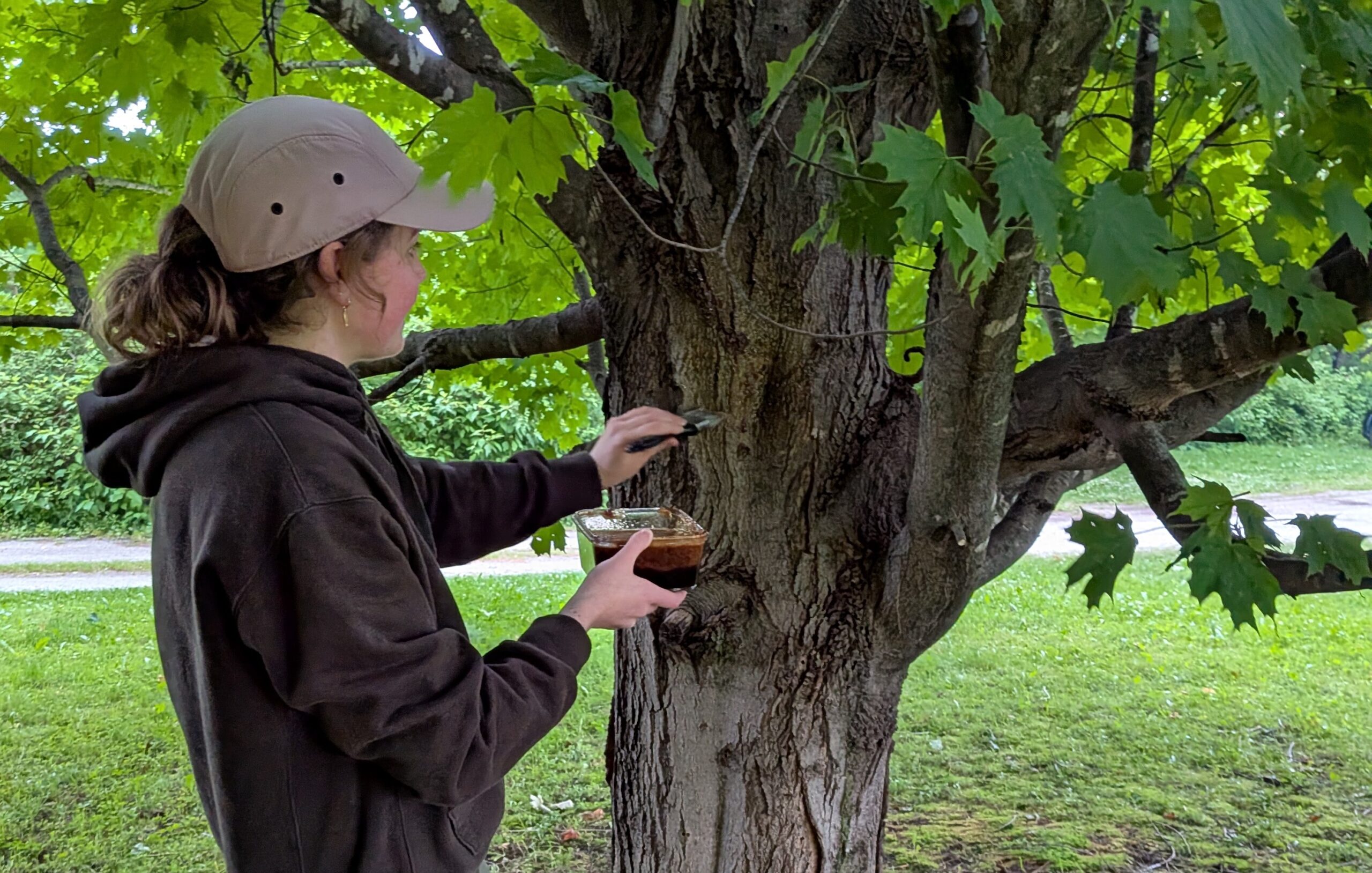
Mothing is when you attract, observe, and take photos of moths at night. Many moths are drawn to short-wave radiation (such as UV or blue light) because their eyes have evolved to detect the light of the moon and stars for navigation in the dark. Having a simple set-up using a white sheet and black light provides an excellent moth trap – plus a great backdrop for photos! However, not all moths are drawn to light. To attract these species, you can cook up a delicious ‘moth bait’ using rotten bananas, brown sugar, molasses, and beer and paint it onto the bark of tree trunks to mimic the sugary nectar meals that moths love.


Moths 101
Moths are an incredibly abundant and diverse group. They are closely related to butterflies, and both undergo metamorphosis – that amazing process of changing from a wriggly caterpillar to a winged adult. Despite vastly outnumbering butterflies in species diversity, moths are a fairly underrepresented group in both research and popular culture. In Ontario, there are fewer than 180 known butterfly species, while there are over 3,000 documented species of moths!

Why should we care about moths?
- Moths play an important role in food webs by being the prey that many bats, birds, small mammals, amphibians, and other insects rely on as a food source. It’s thought that between 6,000 and 9,000 caterpillars are required to raise one brood of chickadees before they fly the nest!
- Moths serve as pollinators, transferring pollen from one plant to the next while they feed on the flower’s nectar.
Both of these roles are important ecologically, but also agriculturally. Agriculture thrives with a healthy ecosystem surrounding it, and moths supporting the food web and acting as pollinators are vital to this system!
What did we find?
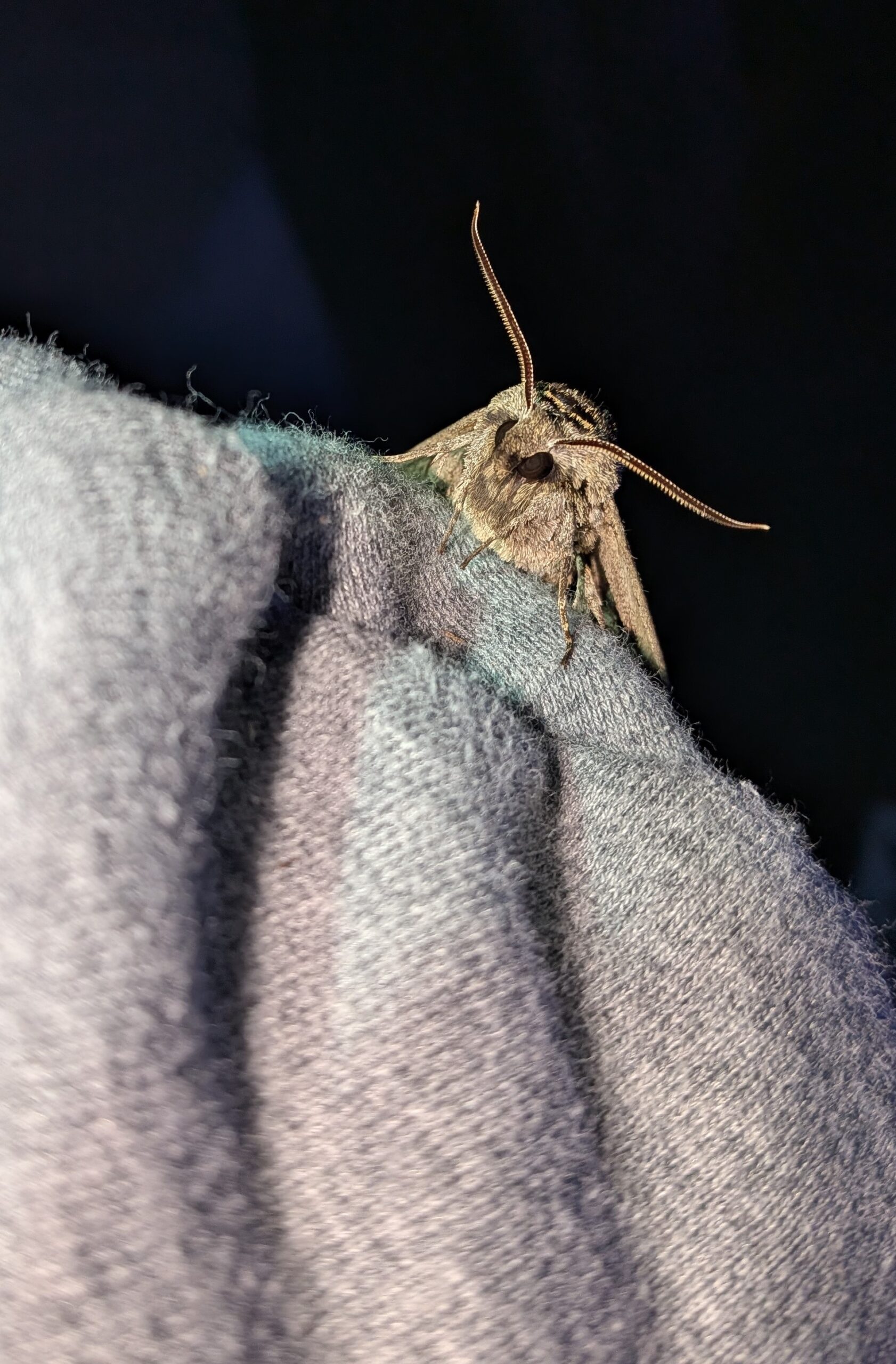
We observed 47 different species of moths (and counting…). The major families of moths we observed were Grass-Veneers, Leafrollers, Geometers, Loopers, Plume Moths, and Sphinx Moths! To see our full species list and photos, check out the Bourgeois Farm Moth Night project on iNaturalist. Thank you to all who came out to go mothing with us!

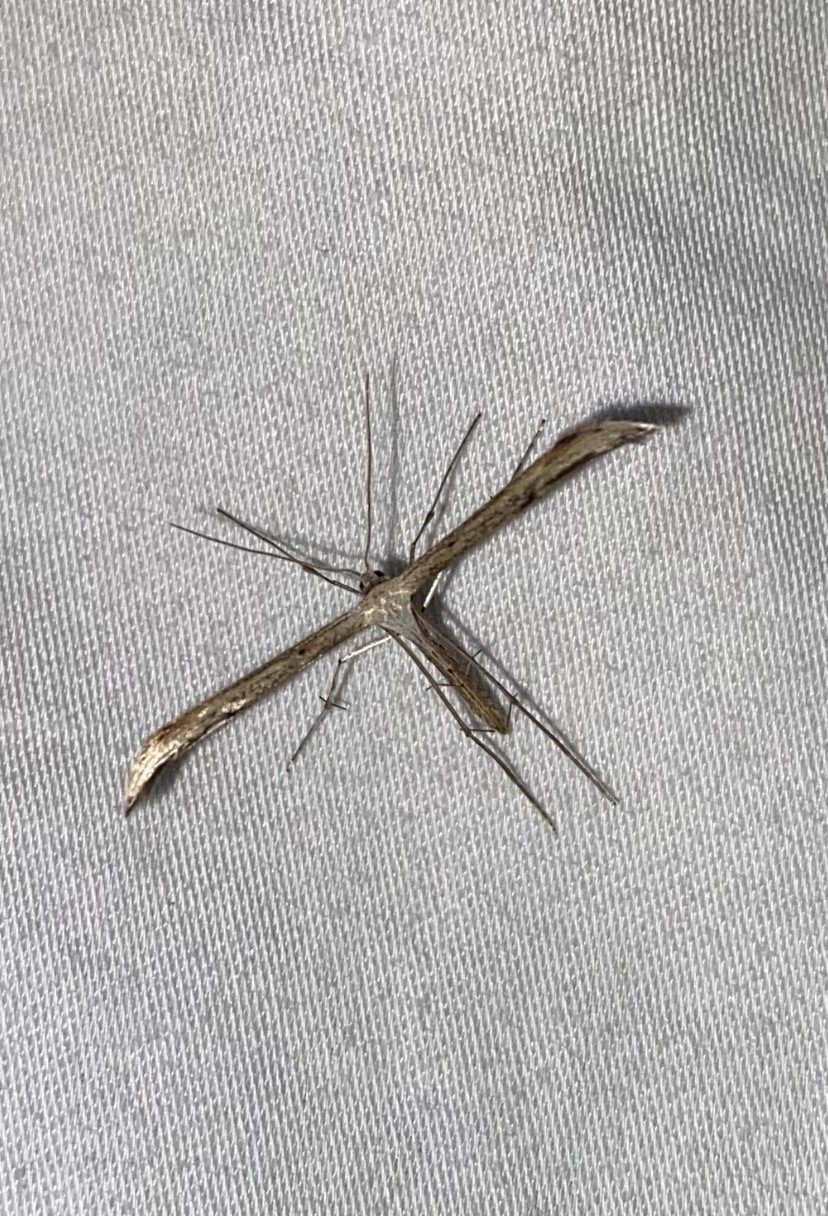

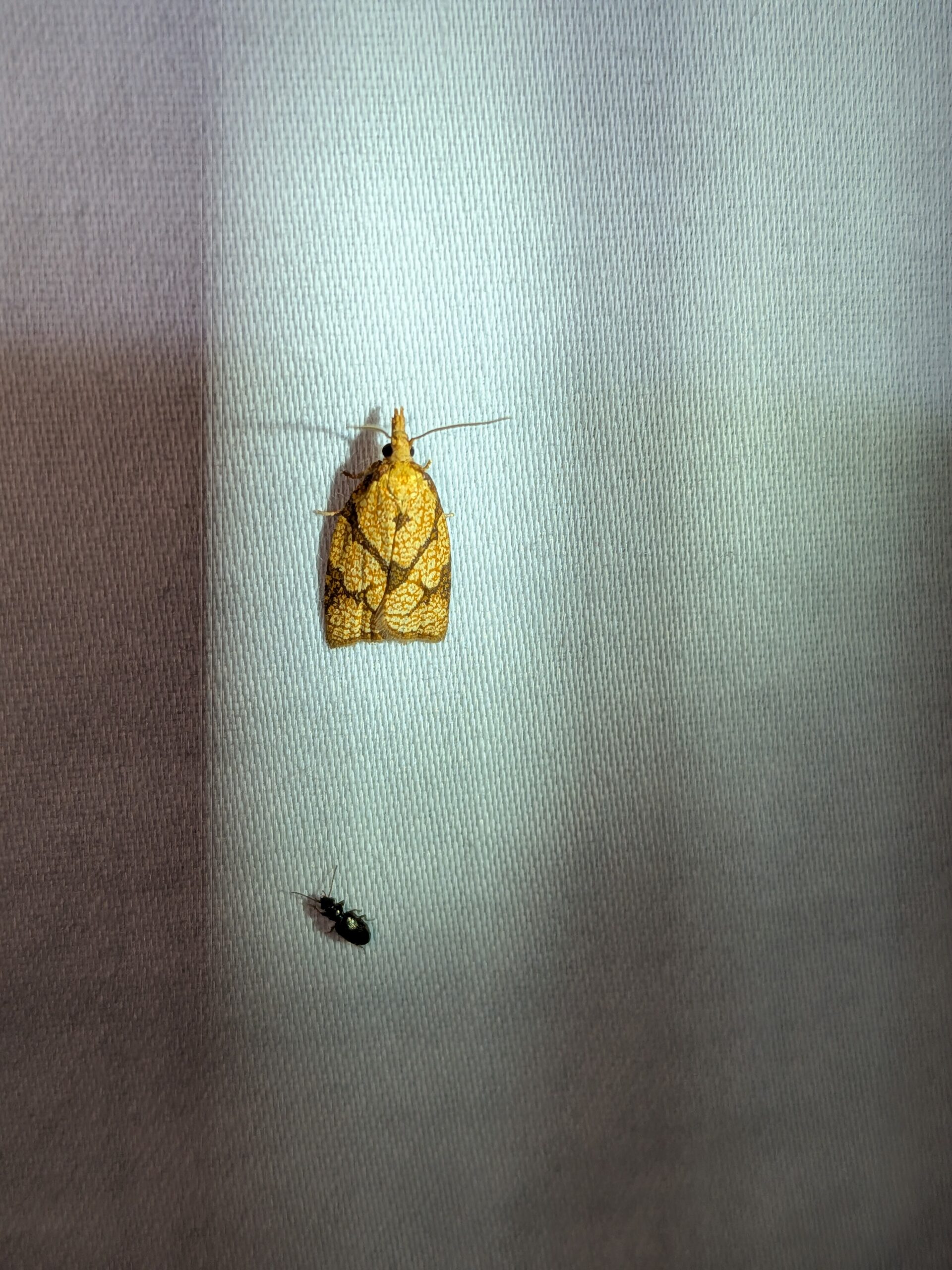
It’s not too late to get out and try mothing yourself! National Moth Week runs until July 26th and any observations added to iNaturalist until this time will automatically be added to the National Moth Week Project. You never know what you’ll find!
Happy mothing!